

Description
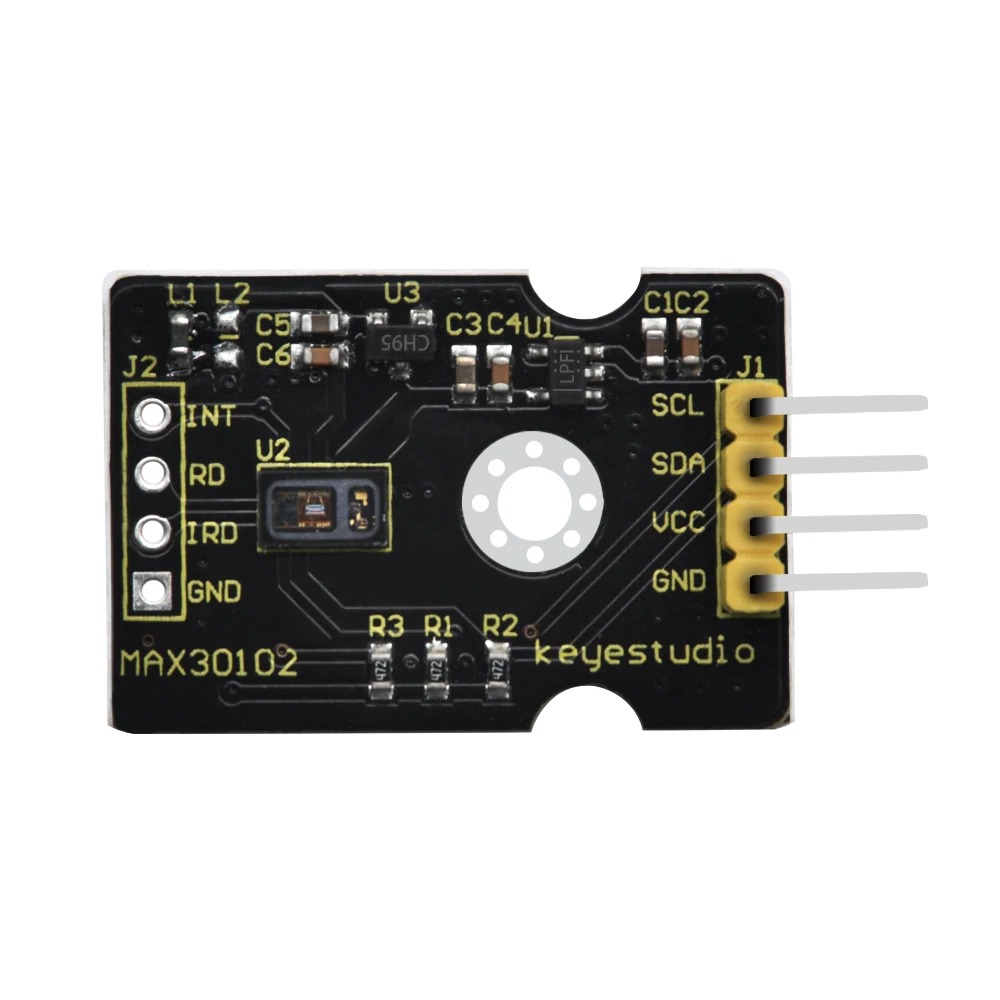
The MAX30102 Oxygen Pulse Breakout Sensor is an integrated optical biosensor used for measuring heart rate (BPM) and blood oxygen saturation (SpO₂). It works by using red and infrared (IR) LEDs along with a photodetector to analyse blood flow changes in the fingertip or skin using the PPG (Photoplethysmography) method.
It is widely used in wearable health devices, fitness trackers, Arduino/ESP32 projects, and medical monitoring prototypes.
KEY FEATURES
• Integrated heart rate and SpO₂ (oxygen saturation) sensor
• Uses red (660nm) and infrared (880nm) LEDs for measurement
• High-sensitivity optical detection with ambient light rejection
• Low power consumption for wearable applications
• I2C communication interface for easy microcontroller connection
• Built-in LED drivers, photodiode, and signal processing
• 18-bit ADC for high-resolution readings
• Compact breakout module design
• Supports real-time pulse waveform output (PPG signal)
• Compatible with Arduino, ESP32, Raspberry Pi, STM32
SPECIFICATIONS
• Product Type: Pulse Oximeter / Heart Rate Sensor Module
• Sensor Model: MAX30102
• Operating Voltage: 1.8V (core) / 3.3V–5V (module boards vary)
• Communication Interface: I2C (Address: 0x57 typical)
• LED Wavelengths:
– Red: 660 nm
– Infrared: 880 nm
• ADC Resolution: 18-bit
• Sampling Rate: 50 Hz – 3200 Hz (configurable)
• Operating Current: ~0.6 mA to 1.2 mA (depending on mode)
• Shutdown Current: ~0.7 µA (very low power mode)
• Operating Temperature: -40°C to +85°C
• Detection Method: Reflective photoplethysmography (PPG)
• Output Data: Heart rate (BPM), SpO₂ level, raw IR & Red signal
• Interface Pins: VIN, GND, SDA, SCL, INT (varies by module board)
• Application: Fitness tracking, health monitoring, wearable devices, biomedical projects

Reviews
There are no reviews yet.